Is there a way to look up the owner of a license plate in Texas without having to call the FBI or the local police?
Finding yourself in a situation where you possess a Texas license plate number but need to identify the driver or owner can be extremely frustrating. Whether it’s a baffling hit-and-run in a grocery store parking lot, mysterious recurring property damage, or you’re researching a used car for sale, the instinct to figure out who is responsible is natural. The common belief, perhaps fueled by television shows, is that obtaining the owner’s personal name and address should be as simple as inputting the plate number into a search bar. In reality, the process of a Texas license plate lookup owner is heavily governed by strict privacy laws, making it significantly more complex — and impossible for the general public through simple, free searches. While you might want to avoid involving law enforcement directly for minor issues, you must navigate a maze of legal requirements to obtain this sensitive information on your own.
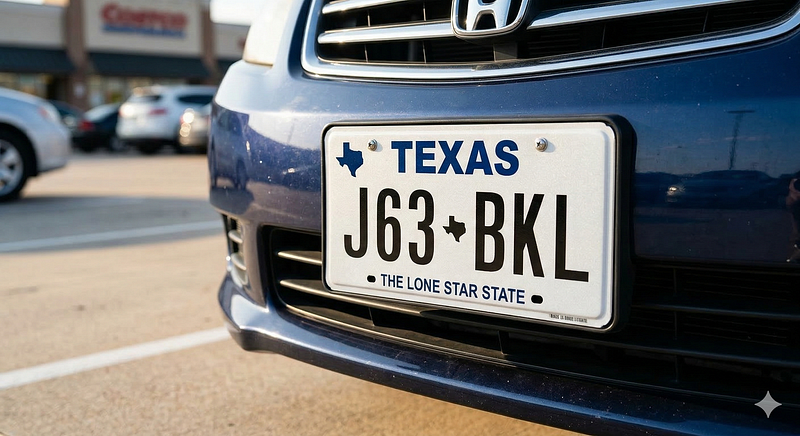
The Big Roadblock: Privacy Laws
The primary obstacle preventing arbitrary lookup of vehicle owner details is the Driver’s Privacy Protection Act (DPPA), a federal law enacted in 1994. The DPPA was largely passed in response to high-profile stalker incidents, notably the murder of actress Rebecca Schaeffer, whose home address was found through DMV records. This law strictly prohibits the disclosure and use of personal information contained in motor vehicle records. Texas has mirrors or equivalents in its own Transportation Code that reinforces these protections, decoupling a vehicle’s plate and VIN from the registered owner’s personal identity (name, address, telephone number, and photograph) within databases accessible to the public. Violating these state and federal laws by accessing or distributing this information improperly can lead to severe civil penalties and criminal charges.
The Only Ways a Private Citizen (Without Police) Can Do This Legally
While free public searches won’t yield personal results, there are specialized services and legal channels that certain individuals can use to access this information if they have a legitimate purpose. Here are the methods available to private citizens without involving the police or FBI.
Hire a Licensed Private Investigator
If you need this information and are prepared to pay for it, hiring a licensed private investigator (PI) in Texas is a common route. PIs have authorized access to specialized databases that often pull from state DMV records or other non-public sources under contract. Crucially, however, a PI must also operate within the bounds of the DPPA and state law. They cannot simply hand you the owner’s information out of curiosity. The PI must have a “permissible purpose” defined by law, such as gathering information for a potential lawsuit (like for an uncooperative hit-and-run driver), skip-tracing, or an insurance investigation. While hiring a professional is a viable way to bypass police involvement initially, it comes with a high cost and still requires a legitimate, legal basis for the search.
How to Directly Request a Texas License Plate Lookup Owner through the TxDMV
The most direct, albeit paperwork-intensive, way to seek vehicle owner information without police is through the Texas Department of Motor Vehicles (TxDMV). You can submit a request for motor vehicle records (typically requiring specific, official request forms and processes). To be approved, your request must fall into one of the narrowly defined permissible purposes under Texas law, mirroring the DPPA. These purposes include use by government agencies, businesses verifying details for anti-theft or product recalls, in connection with civil litigation, for insurance purposes, toll road collection, or private investigator functions (among others). You are required to submit this request under penalty of perjury, explaining exactly why you need the information and providing supporting evidence if applicable. The TxDMV will carefully vet these requests and may notify the registered owner. Curiosity, personal disputes, or tracking a reckless driver for your own satisfaction are not acceptable reasons. This method is slow, requires documentation, and is generally not feasible for immediate solutions.
Working with Your Insurance Company
If your need to find the owner is due to a vehicle accident or property damage, your first call should be to your auto insurance provider. Insurance companies are given explicit access to state-level vehicle owner databases under the DPPA for the purpose of investigating claims, verifying coverage, and pursuing subrogation (the process of getting reimbursed by the at-fault driver’s insurance). Your claims adjuster can use the license plate number to find the other vehicle’s owner and their insurance information. While they won’t necessarily give you the other owner’s personal details, they will handle the legal and financial aspects of your case, effectively solving the underlying problem without you needing to do the lookup directly.
Acknowledge Police Report Importance
While the user’s premise is to find the owner without calling the police, it is essential to emphasize that filing a police report is often the most critical and appropriate first step in many situations. If a crime has occurred — such as a hit-and-run, significant property damage, or stalking — the police have the immediate legal authority and database access (the Texas Law Enforcement Telecommunications System, CLETS, and national databases) to identify the owner and take action. A police report also serves as a critical official record, which you may need later to support an insurance claim, provide to a private investigator, or bolster a direct request to the TxDMV.
The Dangerous and Unreliable World of “Free” Online Lookup Sites
A common question arises: “What about the numerous websites promising free or instant Texas license plate lookup owner services?” It is absolutely vital to approach these sites with caution and realistic expectations. No legitimate website, regardless of advertising, can legally sell you current personal information (name and address) associated with a Texas license plate. Doing so would be a gross violation of state and federal privacy laws. What these websites typically provide, for a fee or minimal information, is basic vehicle history data publicly tied to the license plate or VIN. This might include the vehicle’s make, model, year, maybe details about its emission testing, or if it has a salvage or flood title. They are essentially selling you data they scraped from other public sources or VIN databases, not the current owner’s personal details. Furthermore, many of these sites are unreliable, providing outdated information, and some are outright scams designed to trick you into paying or to harvest your personal information. Be wary of any service claiming they can do what the law forbids.
Alternative Information Sources and Next Steps
Instead of focusing solely on the elusive owner’s name, consider other avenues. Look closely at the vehicle for any alternative clues, such as company decals, commercial logos, or fleet numbers that could help identify an associated business or organization. Utilize security footage from surrounding cameras, talk to neighbors, and document all evidence. Focus on obtaining an official police report if any crime was committed.
If you are looking to purchase a used car and want to verify details like whether it has a clear title, is reported stolen, or has a salvage history, running a Texas license plate lookup owner report [anchor text: Texas license plate lookup owner] (link to https://texaslicenseplate.com/) can provide valuable vehicle history information.

Conclusion
In summary, looking up the personal name and address of a Texas license plate owner is extremely difficult due to stringent privacy protections, particularly without law enforcement involvement. “Without police” means you must navigate specialized, often costly services like licensed PIs or a rigorous, paperwork-laden process directly with the TxDMV, all while possessing a legally valid, permissible purpose for needing the data. Free online searches and services promising otherwise are either misrepresenting their capabilities or operating illegally. If a crime occurred, or if you are involved in an accident, prioritizing official channels and your insurance company is the safest and most effective path to a resolution.